Truck T-bone accidents occur when the front of a commercial truck strikes the side of another vehicle, creating devastating side-impact collisions that often cause catastrophic injuries and fatalities. These broadside crashes happen most frequently at intersections when trucks run red lights, fail to yield right-of-way, or make unsafe left turns across oncoming traffic.
Banderas Law's Ontario truck accident lawyers investigate T-bone crashes, preserve critical evidence, and fight to hold negligent truck drivers and trucking companies accountable throughout San Bernardino County. Whether you were seriously injured or lost a loved one, we are ready to be your advocate.
Schedule Your Free Consultation
Key Takeaways About Truck T-Bone Accidents
- Truck T-bone accidents cause significantly more severe injuries than car-on-car side-impact crashes due to the massive weight and force commercial vehicles generate
- Common causes include trucks running red lights, failing to yield at intersections, making unsafe left turns, and misjudging gaps in oncoming traffic
- Liability in a truck accident depends on right-of-way rules, traffic signals, and which driver violated traffic laws, with evidence from traffic cameras, witnesses, and truck black boxes proving fault
- Victims face serious injuries, including traumatic brain injuries, spinal cord damage, chest and abdominal trauma, pelvic fractures, and wrongful death
- California's two-year statute of limitations applies to truck T-bone accident claims, making prompt legal consultation essential for preserving evidence and protecting your rights
What Is a Truck T-Bone Accident?
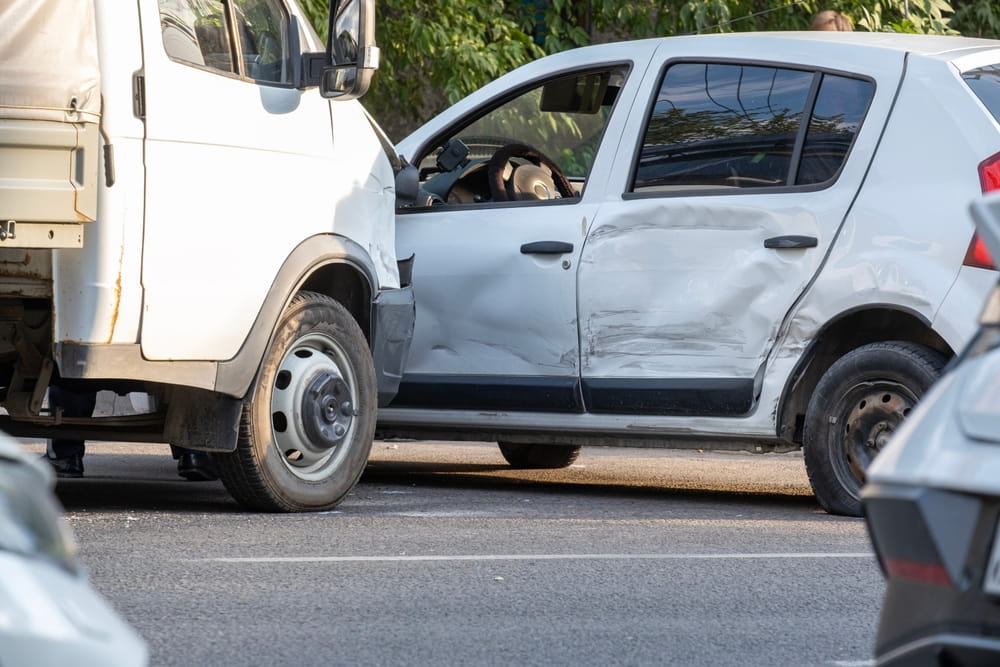
A truck T-bone accident, also called a side-impact or broadside collision, occurs when the front of a commercial truck strikes the side of another vehicle at approximately a 90-degree angle. These crashes create a "T" shape at impact, hence the name. The struck vehicle's side offers minimal protection compared to front and rear crumple zones, leaving occupants vulnerable to direct impact forces.
Commercial trucks involved in T-bone accidents include semi-trucks and 18-wheelers hauling cargo, delivery trucks making commercial stops, box trucks transporting goods, garbage trucks operating on collection routes, and construction vehicles traveling to job sites. Their substantial weight, ranging from 10,000 to 80,000 pounds when fully loaded, generates enormous impact forces that passenger vehicles cannot withstand.
T-bone collisions typically happen at intersections controlled by traffic signals or stop signs, in parking lots where vehicles cross paths, at highway entrance and exit ramps, and on surface streets where trucks make left turns across traffic.
Why Truck T-Bone Accidents Are More Dangerous Than Car Collisions
Side-impact crashes with commercial trucks cause catastrophic injuries and fatalities at higher rates than car-on-car T-bone accidents. The physics of these collisions explain why truck involvement dramatically increases danger.
Passenger Vehicle Collision Protection
Passenger vehicle doors contain minimal reinforcement compared to front and rear structures designed to absorb collision forces. Side-impact airbags provide some protection but cannot fully mitigate the forces generated when multi-ton trucks strike vehicle sides. The proximity of occupants to the point of impact leaves little space for energy dissipation before bodies absorb collision forces.
Semi-Truck Size
Commercial trucks tower over passenger vehicles, causing impact points at window level or higher. This height differential allows truck front ends to override door frames and intrude directly into passenger compartments. Occupants on the struck side face direct contact with intruding truck components, while those on the opposite side may suffer injuries from the vehicle's lateral movement or contact with the struck-side occupant.
Weight Disparity
The massive weight disparity between commercial trucks and passenger vehicles amplifies impact severity. A fully loaded semi-truck weighing 80,000 pounds striking a 3,500-pound sedan generates forces that crumple passenger vehicles like aluminum cans. Even smaller delivery trucks weighing 10,000-15,000 pounds create impact forces far exceeding what passenger vehicle safety systems can manage.
Truck Speed
Truck speed at impact significantly affects injury severity. Intersections where T-bone accidents occur may involve trucks traveling at or near full roadway speed limits when they strike vehicles crossing their path. Higher impact speeds generate exponentially greater forces, leaving victims with little chance of avoiding serious harm.
Common Causes of Truck T-Bone Accidents in California
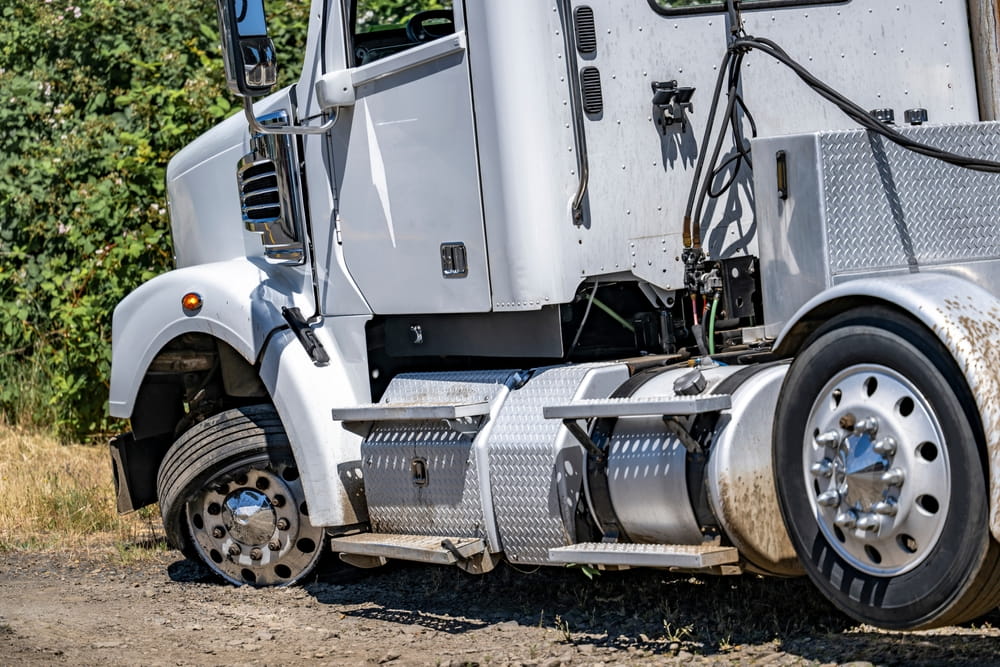
Determining how a truck T-bone crash occurred helps establish liability and identify negligent parties responsible for your injuries. Your truck accident lawyer can help determine the cause and who may bear liability for your damages.
Running Red Lights and Stop Signs
Trucks that run red lights or blow through stop signs at intersections strike vehicles with legal right-of-way crossing their path. Driver inattention, brake failures, misjudging traffic signal timing, and rushing to meet delivery schedules all contribute to signal violations. Red light cameras at Ontario intersections, traffic signal data, and witness testimony help prove trucks entered intersections illegally.
Failing to Yield Right-of-Way
California traffic laws establish clear right-of-way rules at intersections. Trucks that fail to yield when required create T-bone crashes with vehicles having legal priority. Common violations include failing to yield when turning left across oncoming traffic, not yielding to vehicles already in intersections, ignoring yield signs at merge points, and failing to yield when entering roadways from driveways or parking lots.
Unsafe Left Turns Across Traffic
Left turns across multiple lanes of oncoming traffic create particular danger for commercial trucks. Drivers who misjudge gaps in traffic, turn from wrong lanes, or fail to wait for safe opportunities cause T-bone collisions with vehicles they cut off. Trucks' slow acceleration and wide turning radii require larger gaps than passenger vehicles, making judgment errors more likely when drivers feel pressure to keep moving.
Distracted Driving at Intersections
Truck drivers distracted by cell phones, dispatch communications, GPS systems, eating, or other activities may miss traffic signals, fail to see crossing vehicles, or misjudge intersection conditions. Federal regulations prohibit hand-held phone use while driving, but violations remain common. Phone records, electronic logging device data, and witness observations help prove distraction caused crashes.
Fatigue from Hours-of-Service Violations
Fatigued truck drivers experience slower reaction times, impaired judgment, and decreased attention that lead to intersection accidents. Companies that pressure drivers to violate federal hours-of-service rules create dangerous conditions where exhausted drivers miss signals or make poor decisions. Electronic logging device data, driver logs, and delivery schedules help prove fatigue contributed to T-bone crashes.
Brake System Failures
Commercial trucks require properly maintained brake systems to stop safely. Worn brake pads, air brake malfunctions, brake adjustment failures, and inadequate maintenance cause brake failures that prevent trucks from stopping for red lights or yielding at intersections. Maintenance records, inspection reports, and post-accident truck examinations reveal whether brake failures contributed to crashes.
Proving Liability in California Truck T-Bone Accidents
Building strong liability cases requires comprehensive evidence gathered immediately after crashes and through formal investigation.
Critical Evidence in T-Bone Truck Accident Cases
Your attorney gathers and preserves evidence proving fault and establishing damages:
- Traffic camera footage showing signal status and vehicle movements at impact
- Witness statements from other drivers, pedestrians, and intersection observers
- Police reports documenting officer observations and preliminary fault determinations
- Truck black box data recording speed, braking, and operational details before impact
- Electronic logging device records showing hours-of-service compliance or violations
- Cell phone records proving distraction at the time of the crash
- Maintenance records revealing brake system condition and inspection history
- Intersection design and traffic signal timing data establishing right-of-way
- Accident reconstruction analysis, when needed, for determining speeds, impact angles, and sequence of events
Time is critical for evidence preservation. Traffic camera footage may be deleted within days, truck electronic data gets overwritten after short periods, and witnesses' memories fade quickly. Your attorney sends spoliation letters demanding evidence preservation and begins investigating while the crash details remain fresh.
Common Injuries from Truck T-Bone Accidents
The side-impact nature of T-bone collisions creates specific injury patterns based on which side of the vehicle is struck and where occupants were seated.
Traumatic brain injuries occur when heads strike windows, door frames, or intruding truck components, or from rapid rotational forces. These injuries range from concussions to severe brain damage, causing permanent cognitive deficits, personality changes, and disabilities. Brain injury symptoms may not appear immediately, making prompt medical evaluation essential even when you initially feel fine.
Spinal cord injuries result from the violent lateral forces that twist and compress spines during side impacts. Damage to the spinal cord can cause partial or complete paralysis, loss of sensation, and permanent disability requiring lifelong care. Neck injuries, including whiplash and cervical spine damage, also commonly occur.
Chest and abdominal injuries happen when truck front ends intrude into passenger compartments, crushing occupants against door panels and center consoles. Broken ribs, collapsed lungs, internal organ damage, and internal bleeding threaten life immediately after crashes and require emergency treatment.
Pelvic and hip fractures occur from direct impact forces transmitted through door panels into occupants' bodies. These fractures require surgical repair and lengthy rehabilitation, sometimes causing permanent mobility limitations.
Extremity injuries, including broken arms, legs, wrists, and ankle,s result from bracing for impact or contact with vehicle interiors during collision forces. Compound fractures requiring surgery, nerve damage, and permanent limitations may result.
Wrongful death occurs in the most severe truck T-bone accidents when impact forces overwhelm vehicle safety systems and victims' bodies cannot withstand trauma. Surviving family members may pursue claims with a wrongful death lawyer for their losses.
Compensation Available After California Truck T-Bone Accidents
Victims of truck T-bone accidents may recover economic and non-economic damages compensating for all losses resulting from crashes.
Economic Damages
Economic damages include measurable financial losses from your accident:
- Emergency medical treatment and hospitalization
- Surgery and specialist care
- Rehabilitation and physical therapy
- Prescription medications and medical equipment
- Future medical costs for ongoing treatment
- Lost wages during recovery
- Reduced earning capacity from permanent disabilities
- Property damage to your vehicle
- Transportation costs for medical appointments
Non-Economic Damages
Non-economic damages compensate for pain and suffering from injuries, emotional distress and mental trauma, permanent disability and disfigurement, loss of life enjoyment and activity restrictions, and impact on family relationships. California allows juries to determine appropriate amounts based on injury severity and life impact.
Comparative Negligence
California's pure comparative negligence system allows recovery even when you share some fault for the accident. Your compensation is reduced by your percentage of responsibility, but you may still recover substantial damages when the truck driver bore primary fault for the collision.
Choosing to Contact a California Truck Crash Lawyer
Truck T-bone accidents cause serious injuries that require immediate legal representation. Contact a truck accident attorney as soon as possible after your crash, ideally while still receiving medical treatment. These cases require prompt evidence gathering, investigation of trucking company practices, and protection against insurance companies that begin building defenses immediately.
Legal representation becomes even more critical when:
- You're hospitalized with serious injuries or facing emergency surgery
- Doctors diagnose permanent disabilities affecting your work or daily life
- A family member died in the crash, requiring wrongful death claims
- Trucking companies or their insurers are blaming you for the accident
- Insurance adjusters contact you with quick settlement offers
- Multiple vehicles were involved or fault is disputed
Trucking companies dispatch investigators to crash scenes within hours, gathering evidence and interviewing witnesses while you're still in the hospital. Early attorney involvement levels the playing field, preserving crucial evidence and preventing statements that could harm your claim.
The truck accident attorneys at Banderas Law work on contingency fees, meaning no upfront costs and payment only from successful recoveries. This arrangement provides Ontario residents and Inland Empire families access to experienced legal representation immediately after devastating crashes.
FAQ for California Truck T-Bone Accidents
Are Intersection Cameras Available to Prove Fault?
Many Ontario and San Bernardino County intersections have traffic cameras that may have recorded your accident. However, this footage is typically stored for only short periods before automatic deletion. Your attorney can request footage preservation from city or county transportation departments, preventing loss of this critical evidence.
Can I Sue the Trucking Company for a T-Bone Accident?
Yes, trucking companies can face vicarious liability for driver negligence under California law and federal regulations. Companies may also bear direct liability for negligent hiring, inadequate training, pushing drivers to violate hours-of-service rules, or poor maintenance practices.
What If the Truck Driver Says I Ran the Red Light?
Conflicting accounts about traffic signal status are common in intersection accidents. When needed, your attorney can obtain traffic camera footage, signal timing data, witness statements, and accident reconstruction analysis to prove which vehicle had the legal right-of-way. Physical evidence, including vehicle damage patterns and final resting position,s also helps establish the sequence of events.
What If I Was T-Boned While Making a Left Turn?
Left-turning drivers generally must yield to oncoming traffic, but this doesn't automatically make you at fault if a truck T-boned you. If you entered the intersection legally with a green light or arrow and the truck was speeding excessively, ran a red light, or appeared far enough away that your turn was safe, the truck driver may bear responsibility.
How Much Does a Truck T-Bone Accident Lawyer Cost in Ontario, CA?
Banderas Law handles truck T-bone accident cases on contingency fees, meaning no upfront costs and attorney fees only from successful recoveries. We advance all case expenses, including investigation, accident reconstruction, expert witnesses, and litigation costs, allowing you to pursue justice without financial stress while recovering from injuries.
Don’t Wait – Call Banderas Law About Your Truck T-Bone Accident

Truck T-bone accidents cause devastating injuries that change lives permanently through physical trauma, emotional suffering, and financial hardship. When truck driver negligence or trucking company violations cause these catastrophic side-impact crashes, victims deserve compensation for their losses.
At Banderas Law, we investigate truck T-bone accidents throughout San Bernardino County, preserving critical evidence before it disappears and building comprehensive cases proving liability. Our team understands intersection accident dynamics, federal trucking regulations, and how to hold negligent drivers and companies accountable for the serious harm they cause.
Contact Banderas Law today at (909) 707-0000 for a free consultation about your Ontario truck T-bone accident case. We're available 24/7 to begin investigating your crash, protecting your rights, and fighting for fair compensation.